Tuesday, April 9, 2013

Sourdough in the Tropics

My friend Holly makes most of the bread for her household so I made bread nearly every day while we were in Guatemala.


I had taken some sourdough starter along in my suitcase. It wasn't that I couldn't bear to leave my starter, I just thought Holly would enjoy playing with it. But whether she did or not, I sure did.


I've never saw sourdough grow so well. I can get a good crop of bubbles in Pennsylvania but in Guatemala the same starter was so bubbly is foamed! I don't know if it was the difference of flour, or weather, but the starter liked its new growing conditions. I know I'm crazy but it made me bubbly happy to see such happy sourdough bubbles!


I learned a few things by baking bread in Guatemala. First, I relearned the joy of hand mixing/kneading bread. Every morning I pulled out the big red bowl and a couple measuring cups and mixed up a new batch of bread. So simple. So few dirty dishes. I usually made a double batch of the soft sourdough bread making either loaves or rolls with the dough. I thought it would be too much dough to knead by hand but it wasn't bad. If I would have had another week of bread baking, my arms would have probably become used to it and it would have been even easier.


Second I was surprised at how mild the sourdough tasted. I always thought that hot temperatures would make a more "sour" flavored sourdough. But Holly's kitchen was certainly warm, over 100 degrees most days. The sourdough pot sat next to the bean slow cooker and was certainly cozy warm. But the sourdough bread was very mild flavored and not sour tasting at all. I'm not sure if it had to do with the flour (I was using white flour instead of the usual whole wheat I bake with.) Or if since the dough raised faster in the warm temperatures it didn't have as long to acquire a strong flavor. Or something I haven't considered.

Whether the mild flavor is a good thing or not is dependent on your goals. My husband actually likes a bread with a lot of flavor! But regardless, the bread was very tasty, actually sweet - and addictive.


So if you live in the tropic - give sourdough a try! From my experience, sourdough flourishes in the warm, humid environment!


Monday, April 8, 2013

Working Hands

Our goal in going to Guatemala was to help our friends build their house. If the rest of this post sounds like we were terribly busy, well, we were - but that was good. Nothing would have been worse for my husband then to take off work and travel that far to find himself sitting around because the cement didn't come, or the weather didn't cooperate, or any number of other reasons that can derail plans. Ed put in a lot of work hours, getting up early and staying up late - and he loved it.


The house site was two or so miles out of town in a ranching area. We called it The Hill as it was the highest spot for some distance. The view from the top was spectacular in all directions.  Coming from cold, barren Pennsylvania, the green, lush tropics was breathtakingly beautiful. The house is being built into the side of The Hill. The basement was already built when we arrived. Ed helped to get ready to pour the floor of the house, which was the basement ceiling.


When we arrived, they were having a hot streak that had even the locals commenting on the heat. Ed and I thought we'd croak when the temperature rose above 100 degrees. Thankfully, a few days later the weather turned cool and cloudy.


On the day they planned to pour concrete it rained. The cool, damp weather conditions were much better than the extreme heat for concrete pouring. Lots of friends came to help pour concrete. I'll show my ignorance and admit that when I thought of them pouring concrete, I visualized how we do it in the US with a huge truck pulling up and stretching out a gigantic slide to pour the concrete where ever you want it.


But here there is a lot more hand work involved. Shoveling sand and stones into buckets, dumping into a small cement mixer, and hauling concrete in wheelbarrows.


It is hard work, and adding in some rain made it miserable work. By dark, the rain was falling in earnest. There was no hope of troweling it smooth in a downpour. Benj and Ed returned home for some sleep. But the rain soon quit and by midnight they were out at the house site again and worked until breakfast. Despite all the problems, the floor looked rather good by the time they finished.


Ed's project the rest of the week was building a block house wall. His recent experience with our own house project paid off, though they do build a little differently in Guatemala to help withstand earthquakes.


 The work crew

True tale of heights!
Ed especially enjoyed working with these guys. They tried to teach him Spanish (and he picked up quite a bit in one week) and were just a lot of fun.


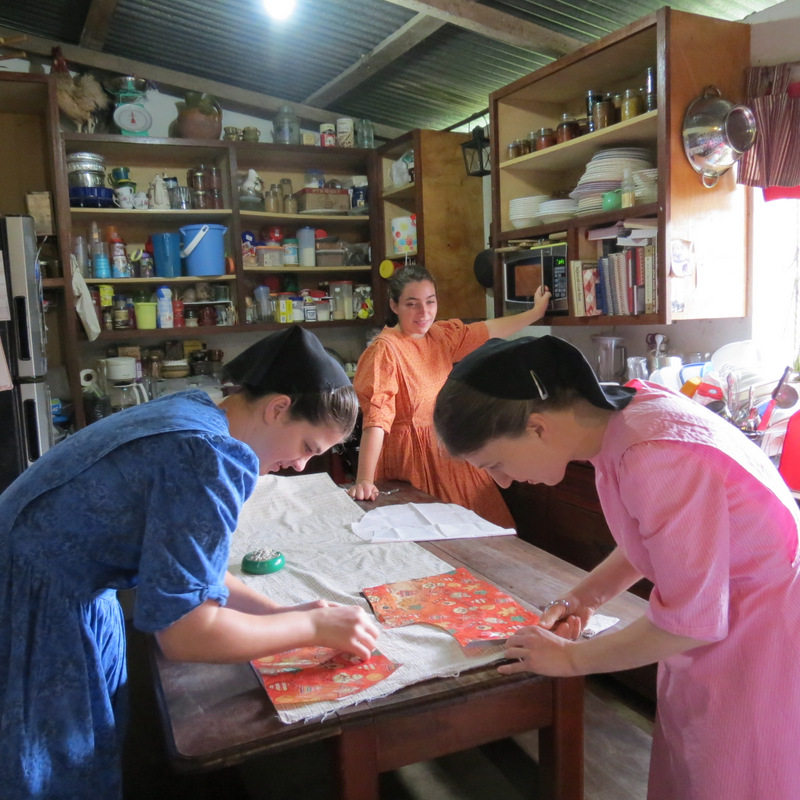
And what was I doing? Laundry, cooking, sewing - just normal homemaking tasks. Though with the size of this household, there was just more of it than I am used to! There seemed to be an endless supply of dishes to wash or clothes to hang up on the line.


I enjoyed helping to sew a couple dresses for one of Benj's sisters and made a denim blanket out of a stack of old jeans.


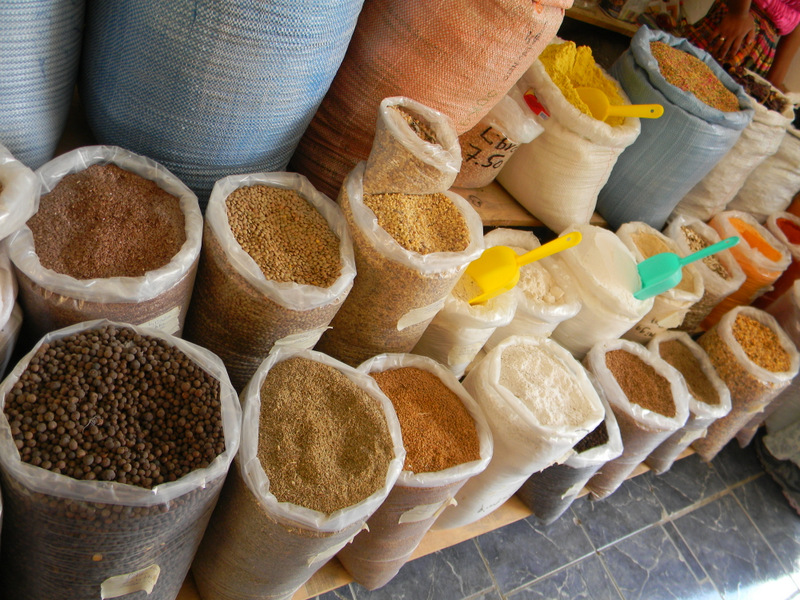
Shopping was a whole set of adventures and a story in itself! I loved the piles of fresh produce.


But the best part was the opportunity to catch up on a lot of conversation with Holly. We had years of back log to get out! Work is always more fun when combined with great conversation!

Friday, April 5, 2013

Travels

We did take a trip to the tropics. And yes, my husband and I did leave the children behind and go alone.

But it wasn't exactly a romantic get-away. Or even a vacation.

But I'm not complaining. The trip was a dream come true and we had a wonderful time.


 Holly and I

Twelve or so years ago, my dear friend Holly went to Guatemala to serve as a nurse in a mission clinic. A year later, I was able to visit her. And I've always wanted to go back.


 The Good Samaritan Clinic

But I married, and had children. Occasionally, Ed would mention visiting Guatemala someday but it looked impossible. I figured we would have to wait until our children were grown.


 Benj and Holly, Ed and I

Six years ago, Holly married one of her co-workers and she and her husband Benj made Guatemala their home. Their days are spent encouraging others and their small house is presently the home to, not only Benj and Holly and their three young children, but also five youth.


 The two clinic nurses who live with them.

To continue their ministry of discipleship, Benj is building a larger house. Several months ago, Ed shocked me by saying that he wanted to go help Benj build the house. Now, not some future day. Ed didn't have to twist my arm too hard to come along! Thanks to the generous offer from my parents to keep our children, a dream became reality.


The two young men who are presently also living with there.

The trip there was grueling. Guatemala contains various climates and terrain. Holly and Benj live in the Peten which is the northern tropical region. We flew into Guatemala City which is located in the mountains. It was after dark and we were already tired from a day of traveling but we were not there yet. We spent the night traveling through the mountains and curves with whitened knuckles.

 
There was more than one reason why I was relieved to see Benj and Holly's front gate (with its lovely flowers in the early Saturday dawn.


Since their house was already maxed out, Ed and I stayed in a tent in the backyard under the coconut palms. We enjoy camping and had no complaint about our accommodations. 


But unknown to us, our tent was pitched under the chicken roosting tree. Whoever says that roosters crow at sunup were never in Guatemala. Hours before daylight, an ear piercing screech sounded directly over our tent. I thought I could tune out a lot of noise but the five roosters in the tree crowed loud enough to blast the ear drums. It was answered by the dozens of other roosters all over town.


After enduring what seemed like hours of this, I stuck my head out of the tent door and yelled at them to be quiet. The roosters ignored me but the dog next door woke up and added to the din. Ed thought it was rather funny. Not the roosters, but my attempt at shushing them. At that point, we might as well be l laughing.


The children and I climbing the chicken roosting tree. 

The sun came up at 5:30 and mercifully put an end to the racket as the roosters jumped down and began to harass the hens. The next night we dragged our tent to the other side of the yard. We could still hear the roosters but at least they weren't directly over us. We slept much better, but maybe we were just too tired to care about noise.


Most of our meals were served in the back yard. It was cooler out under the trees, and much less crowded then the small kitchen.


Food always tastes better outdoors anyway. And we did eat good! I wish I would have thought to take photos of our food. We ate homemade corn tortillas at least once a day, sometimes every meal. And of course, lots of beans and rice. So good!


I did remember to take pics of tamales, a special holiday treat in Guatemala. Inside the banana leaves is a corn dough, meat and sauce. Yummy!


I've rambled on enough for today. Next I'll show you some pics of the work we did while in Guatemala.

Wednesday, April 3, 2013

Home Again

Home is wonderful.

Especially after traveling.


While I recover from jet-lag - want to guess where we have been?

Friday, March 22, 2013

Blogging Break

I'm going to be taking a blogging break and enjoying some off-line time.

Feel free to peruse the archives for recipes, book reviews, and gardening information.

Be back again in April!

Thursday, March 21, 2013

Seed Saving - Part 2

Yesterday we talked about properly saving seed from year to year.

But often when gardeners talk of saving seed, they are referring to growing their own seed, instead of purchasing seed.

I'll come right out and say that I have little experience in growing my own seed. I've made attempts at saving pumpkin, corn, and bean seeds. But typically, I'd rather allow the experts to do the work of growing seeds.

And I don't think I'm just being lazy.

Often I hear gardeners, usually newbies, excitedly proclaim that they are purchasing heirloom seeds so that they can save their own seeds and never have to buy seed again.

The goal may be a good one, but it isn't as easy as it sounds. Please, before you try growing your own seed, do your research. Read a book such as Seed to Seed by Susan Ashworth.

There is two problems with growing your own seed, cross-breeding and in-breeding.

But first, some seeds are easy to grow. Beans, peas, tomatoes, and lettuce are examples of self-pollinating vegetables that are rather simple to grow. Lettuce can cross-pollinate if it is grown near another variety, but basically these vegetables are rather problem free. Get a few tips from a book like Seed to Seed, and have fun.

But other vegetables are more complicated.

For example, cucurbits, the family of vegetables that include melons, pumpkins, squash and cucumbers, are pollinated by insects. To prevent in-breeding the blossoms need to be fertilized by pollen from a different plant. Bees and other insects are quite happy to visit the blossoms and share the pollen from plant to plant. BUT if that plant happens to be from a different variety, or worse, a different vegetable all together the seeds will share genetics from both of their parents.

Let me make this clear that you can plant squash, melons, and cucumbers together in the same garden. They can wind their tendrils over each other and produce wonderful squash, melons, and cucumbers. This year's fruit is not affected. But if you save those seeds and plant them next year, the result is likely to be a cucumber flavored watermelon, or a squash shaped cucumber.

If a friend offers you seed from the wonderful pumpkin they grew, don't bother planting it unless you are sure they had no other vining plants growing within the flying distance of a bee.  Or unless they are a fledgling plant seed grower who knows how to isolate a pumpkin flour with netting so that no bees pollinates it, and hand pollinates their pumpkin blossoms with a paint brush.

Yeah, too much work for me to grow my own pumpkin seed.

The other problem with pollen-exchanging vegetables is inbreeding. Plants like corn and cabbage need a sizable gene pool to properly pollinate - maybe as many as 200 plants. I don't know about you, but I'm not growing 200 cabbage plants just to provide myself with seed for next year.

So, I'm back to buying the best quality seed that I can, storing it properly for several years, then gratefully buying more seed from a good seedsman.

But maybe I should grow the easy seeds, like beans and tomatoes. In fact that might be a good project for my children this summer...

What about you? Do you grow your own seed?

Wednesday, March 20, 2013

Saving Seeds - Part 1

Saving seeds is a great way to save money in gardening. Right?

Saving seeds can mean different things. I have received numerous questions about saving seeds. And I'll address the two ways to save seeds today and tomorrow.

Here is the first question.

We usually do not have space to plant every seed in the packet. What do we do with the rest of the seeds?  - Margo

Good question. Buying seeds instead of plants is a great way to save money. For example, a pack of zucchini seeds will give you 20 or 30 zucchini plants, for the same amount of money that you would purchase one or two zucchini plants.

But if I can only use one or two zucchini plants and the rest of the packet of seeds goes to waste, I haven't saved any money.

Thankfully, many seeds are good for several years. I will even buy a larger pack of seeds then I need because it reduces the cost to purchase a larger amount in most mail order catalogs. A half a pound of beans seeds cost less per unit than a small pack of 100 beans seeds. I purposely plan to use the seeds for several years.

But unless seeds are stored properly, they will lose their vigor and not germinate well. And no money is saved.

The key to seed storage is cool and dry. If you store your seeds in a warm, humid environment, they will rapidly decrease their life span. Seeds also do better if their temperature and moisture content does not vary much.

Do your best to keep your seeds dry. That means not letting your seeds lay out by the garden overnight to collect the dew. (Yeah, I've done that.) Carry your seeds to the garden in a bucket to keep them off the damp earth and get them back indoors quickly. If they do become damp, dry them well in a sunny spot, but they may have already become damaged.

Store them in the coolest place you can manage. A cool bedroom closet or basement (as long as it is not damp) can work well. Some gardeners keep their seeds successfully in an air-tight container in their refrigerator.

My mother-in-law keeps her seeds in the freezer. I liked that idea better than the fridge, because fridge space is in high demand. Since my mother-in-law has grown her own plants from seeds for more years than I've been alive, and has beautiful gardens to prove her green thumb, I have followed her advice. I have had great germination rates for numerous years with the seeds that I've kept in the freezer. I try not to fluctuate the seeds temperature any more than necessary, only removing the seeds I need, and placing them back in the freezer as soon as possible.

Another reason to store your seeds in an air-tight container is the four-legged friends. One year I placed my bag of garden seeds in my cool, dry basement. When I had prepared the soil and wanted to plant garden, I found that the mice had gotten into the bag and eaten all the sunflower and corn seeds! I had to take a quick trip to the garden center before I could finish planting the garden.

Do you keep seeds from year to year? Where do you keep your seeds?

Next time...another aspect of seed saving.

LinkWithin

Related Posts with Thumbnails