Wednesday, March 21, 2012

Grow, Eat, Enjoy - Sweet Potatoes


In the past few weeks, we finished the last of our sweet potatoes, saving the final two potatoes to start our new sweet potato plants. I find sweet potatoes easy and fun to grow.

Last year we had a very poor crop. I planted too late, right before a dry spell, and the ground hogs thought the sweet potato plants were their buffet. Our crop of sweet potatoes was very small but my parents shared some of their sweet potatoes with us.

This year, I am starting my sweet potato plants much earlier. I plan to put a soaker hose along the hill for easy watering, and be vigilant against animals.


Grow

Sweet potatoes, unlike regular potatoes, are started with plants. You can grow your own plants by placing a sweet potato in water. I have two sweet potatoes in water right now. The one is just starting to grow fine roots and tiny sprouts. I wrote step-by-step directions on starting sweet potato plants.


Sweet potatoes are grown on a hill of soil. Since they like warm weather, in my area, they are not planted until June. Last year, just for an experiment, I planted a whole sweet potato that already was sprouting leaves. It did not produce new sweet potatoes like the little sweet potato plants.

Sweet potato plants are harvested near the time of the first frost. Frost will blacken the leaves of the sweet potato plant. Of course, they will not continue to grow after a frost so they need dug immediately.


With proper curing sweet potatoes will last all winter. The sweet potatoes that we just ate, were still in perfect condition. Sweet potatoes actually improve in flavor with time. Some people won't eat their sweet potatoes until after the New Year when the sweetness has increased.

Sweet potatoes are one of the simplest vegetables to store. Sweet potatoes don't need to be canned, frozen, or stored in a cold cellar. Since they are best stored in a cool room, my grandmother would wrap the sweet potatoes in newspaper and store them under her bed.

Eat

I love having stored sweet potatoes to eat in the winter. Sweet potatoes contain more vitamins than almost any other vegetable. We enjoy mashed sweet potato crunch as a treat over the holidays.
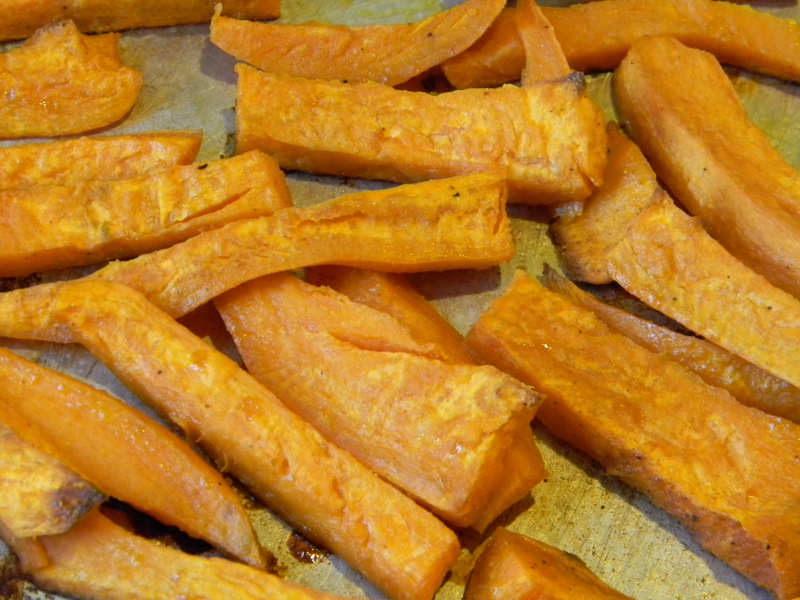
 

But our favorite way to eat sweet potatoes is oven roasted. Roasting  brings out the sweetness. My children like when I cut them into french fry strips and serve with ketchup.


Sweet Potato Biscuits


One-Dish Pork Dish  - with sweet potatoes and apples

If you want more information on raising sweet potatoes, check out this article, Grow Sweet Potatoes - Even in the North. It gives lots of good information on raising and storing sweet potatoes.

Do you grow sweet potatoes? I'd love to hear your tips and recipes!

Friday, March 16, 2012

Ten Tips for Sourdough Success

Are you baking with sourdough but feel that there is still room for improvement? Here are ten tips for successful sourdough baking.

1. Make sure your starter has been fed at least once and became bubbly before using your starter to bake. Crackers and waffles are not as critical, but for bread baking, an active bubbly starter is vital. For best results, feed your starter twice, giving time to expand each time, before baking.

2. Patience, patience, patience! Sourdough does not work in a hurry. Give the wild yeast in your starter time to work. Time is also what softens your whole wheat, makes your bread softer, and may increase the nutritional value.

3. Find a schedule that works for you. I actually like the sourcedough timetable. With commercial yeast, if bread needs to be shaped or baked, it needs attention immediately. Sourdough is more adaptable. I often mix up bread dough while I'm washing up the breakfast dishes. I can ignore the dough all morning while we are having school. At lunchtime, I shape the dough into loaves. By late afternoon, I pop the bread in the oven for some fresh warm bread by the time my husband comes home. You will find a timetable that works for your schedule.

4. Always save some starters. This is obvious - but I can't tell you how many times I almost used up all my starter in a recipe. I've nursed it back to life with not much more than the starter clinging to the sides of the bowl. This is a good excuse to share a favorite starter with a friend - so I can always ask for some starter back if I lose it completely.

5. Sourdough likes it warm. Not hot, not cold, but just right. Have all your ingredients at room temperature before mixing. If your flour is in the freezer, let it warm up first.

6. If you have a Bosch mixer, all the sourdough bread recipesI have shared can be doubled. If you are just learning, I wouldn't recommend doubling, but once you are making bread successfully, baking a double batch and freezing the extra loaves is a blessing for a busy mom.

7. Sourdough grows best in a slightly wet dough. The dough should not be excessively sticky, but during the long rising time, much of the excess moisture will be absorbed. Kneading a wet dough is easier with a machine. When hand kneading, I find that making my hands wet and using a dough scraper, I can avoid adding any extra flour.

8. For accurate measuring, stir your starter before measuring. Even better, weigh your ingredients.

9. For an enriched dough, you can add any of the optional ingredients from the potato bread recipe , into any of the othersoft bread recipes. Mashed potatoes, potato water, egg, vital gluten, soy lecithin and vitamin C will all help bread in various ways. You can read about specific dough enhancers here. If you are not pleased with your sourdough bread, give one, or all of these dough enhancers a try.

10. I don't know why, but scoring the top of my sourdough bread seems to enhance the oven spring. I slash the top of the loaf immediately before sliding the loaves into the oven. If I forget, they don't seem to raise as high.

Any other sourdough baking tips that you'd like to share?

Monday, March 12, 2012

A Day Later

Maybe I should add a footnote to the garden planting post.

On Sunday morning, every leg muscle screamed. Walking up steps or kneeling to put shoes on a child was agony. I knew I had not got out much this winter, but I didn't expect it to be this bad.

So take a tip from me on what NOT to do.

Start your spring work gradually. Don't overdue it on your first day out.

And stock up on Motrin.

Saturday, March 10, 2012

Planting Garden

This morning we planted our garden. While our main garden is still muddy, Ed thought our upper garden would be dry enough to roto-till.


Though the sun was warm, the wind made coats feel good. After tilling, Ed made the furrows with a push plow. He is far better than me at making straight rows.


We had eager helpers to plant potatoes.


We planted two pound of pea seeds, two pound of onion sets, and 25 pound of seed potatoes. Later we will plant more onions and potatoes.

I think we are meeting our goal to focus on growing the basic vegetables - but planting lots of them! We figured we planted a quarter acre this morning.


If you read this and think you are late in planting your garden - don't worry. You southerners are probably picking fresh strawberries by now, but for those in zone 6 in Pennsylvania, there is no rush in planting garden yet. The old timers always say to plant potatoes on Good Friday which is still weeks away.

Maybe we were in a rush today, but the next few weeks look crazy. We know from experience, when the ground is dry enough to plant, we need to move quickly. With our clay ground, sometimes rain showers will keep us out of the garden for most of the spring.

When do you plan to plant your garden?

Wednesday, March 7, 2012

Sourdough Pizza Crust


Sourdough pizza crust is our new favorite. I struggled with sourdough pizza crust for months. I have met success after learning to use a pizza peel and baking stone. If you don't use a stone, I find that it is best to pre-bake the crust for a few minutes before loading on the toppings. I usually double this recipe and divide it into three 12 inch crusts but you can make your crust thinner or thicker as you desire.

Sourdough Pizza Crust

1 1/2 cup sourdough starter
1 T oil
1 tsp salt
1 T honey
1 or more cups whole wheat flour (or white if you prefer)


Several hours before you wish to eat, combine all ingredients together. Depending on the hydration of your starter, you may need more flour, but the dough should be very soft and not stiff. Knead dough well. Allow to rest at room temperature in covered bowl for an hour or two. The dough will not rise much.

Preheat oven to 550 degrees. If using a baking stone, preheat the stone as well. Roll out dough to thickness desired. Place toppings on pizza, slide onto stone if using, and bake for about seven minutes. Bake time will depend on crust thickness and how many toppings. Enjoy!

For more sourdough information - see the sourdough page.

Friday, March 2, 2012

Off the Shelf - February

Was it because of the longer winter evenings and lazy Sunday afternoons that we read so many books this month? Or because a friend shared a whole box of books with me? Whatever the reason, we found many favorites this month. Here are the highlights.

Picture Books

Jesse Bear, What Will You Wear? by Nancy Carlstrom
A sweet rhyming book that I read more times than I want to remember this month.


Harry, The Dirty Dog by Gene Zion
Could you guess that this was my four year old's favorite! Boys, dogs, dirt - yes!

Snow by Cynthia Rylant
We didn't see much white stuff this month. Reading about snow was the next best.

Swirl by Swirl by Joyce Sidman
Lovely illustrations of swirls found in nature.

Ask Mr. Bear by Marjorie Flack
A classic tale that never grows old.

Up, Down and Around by Katherine Ayers
Maybe spring fever is setting in if we are reading picture books about gardening.


Family Read Alouds

Minn of the Mississippi by Holling C. Holling
This book combines geography, history and nature while following a turtle's travel down the Mississippi River. We've enjoyed Holling's other books but found this one more difficult to understand. I did a lot of explaining to the children but it was still worthwhile. I would recommend the book for older children.


Copper-Toed Boots by Marguerite de Angeli
Angeli is one of our favorite authors, especially her books depicting Pennsylvania history. This book recounts her father's life growing up in Michigan. My children begged for another chapter.


Winter Moon by Jean Craighead George
I love George's nature writings. This one follows the lives of four different animals - owl, mole, sparrow, and bear, emphasizing their winter activities.  I plan to look for the other seasons in this series.

The Burgess Animal Book for Children by Thornton Burgess
Our whole family enjoyed listening to this book on audio in the van. While the story is old fashioned, I learned as much as the children did about many different animals.


Adult Books

Radical by David Platt
I didn't expect to enjoy this book and only read it because it was assigned in our book club. But though it is short, it places a powerful punch on whether we are truly following Christ or just living out our easy American life.

Ordering Your Private World by Gordon MacDonald
In the busyness of life, I needed to read a book on the importance of ordering my inner world on the Lord and His Word. This is one I'll be re-reading.

The Heart Reader by Terri Blackstock
A fiction story of a man who woke up one morning with the ability to hear the heart needs of others. It sounds rather hokey, but it made  me look at others in a new way. Am I so focused on myself that I miss the heart cry of those around me?

Don't Make Me Count to Three  by Ginger Plowman
This is one of the most practical biblical child training books I've read. Another book I will visit again.

The Five Love Languages of Children by Gary Chapman and Ross Campbell
 A needed look at the heart needs of my children and how to fill them.

The Proverbs 31 Lady and Other Impossible Dreams by Marsha Drake
I've often read Proverbs 31 and wondered how to live up to this description of a Godly woman. In this fiction story, the goal of being a Proverbs 31 Lady has ridiculous results. A funny but thought provoking reminder that I can't do it on my own strength.

What did you read in February?

Wednesday, February 29, 2012

Slippery Pot Pie

When most of you hear "chicken pot pie" you probably envision a crust, layered with chicken and vegetables, covered with another crust and baked.

Chicken pie is one of our comfort foods - but if you are from south-central Pennsylvania, you know that "pot-pie" is not a pie, it doesn't have a crust, but it is good. Often it is called "Slippery Pot Pie" to distinguish from the baked crusted version.

In southern Pennsylvania, you may see signs for a church supper or fire hall fundraiser for "pot pie." Back in the kitchen, you'll find some grannies simmering a large pot with chicken and veggies swimming in broth. They will roll out pasta dough, cut into squares, and drop the pasta in the stew. Crowds gather and if you come late, there may not be any left.

I'm guessing that pot pie, Pennsylvania Dutch style, is something you either love or hate. It wasn't a meal I was fond of as a child. My mom usually made it with rabbit, and maybe the idea of wild critters in the pot was my turn off.

But now I find pot pie a favorite comfort food and perfect winter night meal. It is very similar to chicken soup. I took the liberties of changing the original recipe. Most pot pie is colorless and slightly bland. I preferred to add some color and flavor. The measurements are not exact. Use more or less as you wish. I added corn the last time and next time I'd like to try mushrooms. You can even substitute the chicken for beef, pork - or rabbit!


If you have never made homemade pasta before, this is a good place to start. The dough does not need to be super thin. Roll it as thinly as possible but the goal is a noodle thicker than normal. For fast cutting, use a pizza cutter.

Slippery Pot Pie


1 onion, chopped
2 stalks celery, chopped

2 garlic cloves, minced
2 carrots, diced
2 cups chicken, chopped

2-3 potatoes, diced 
2 quart broth
3 T parsley
1 tsp thyme
1 tsp salt
1/2 tsp pepper

Saute onion, celery and garlic. Add vegetables, chicken, and broth. Cook until vegetables are tender. Drop pasta dough into boiling broth. Cook for 5-10 minutes. Serve

Pot Pie Pasta Dough

1 1/2 cup flour
1 egg
3 T cold water
1/2 tsp salt

Mix flour, salt and egg. Add water. Knead to form ball. Cover and allow to rest for 15 minutes. Roll out thinly and cut into 1 or 2 inch squares.

Have you ever heard of slippery pot pie?

LinkWithin

Related Posts with Thumbnails